Web3 & Blockchain
Blockchain for UAE Supply Chains: Traceability and Trust
Jul 01, 2026
Introduction
The UAE is a global logistics hub, with Dubai ranked among the world's busiest ports
and airports. But supply chains face growing pressure for transparency—from
consumers, regulators, and trading partners. Blockchain is emerging as the solution that
delivers traceability without relying on a single central authority.
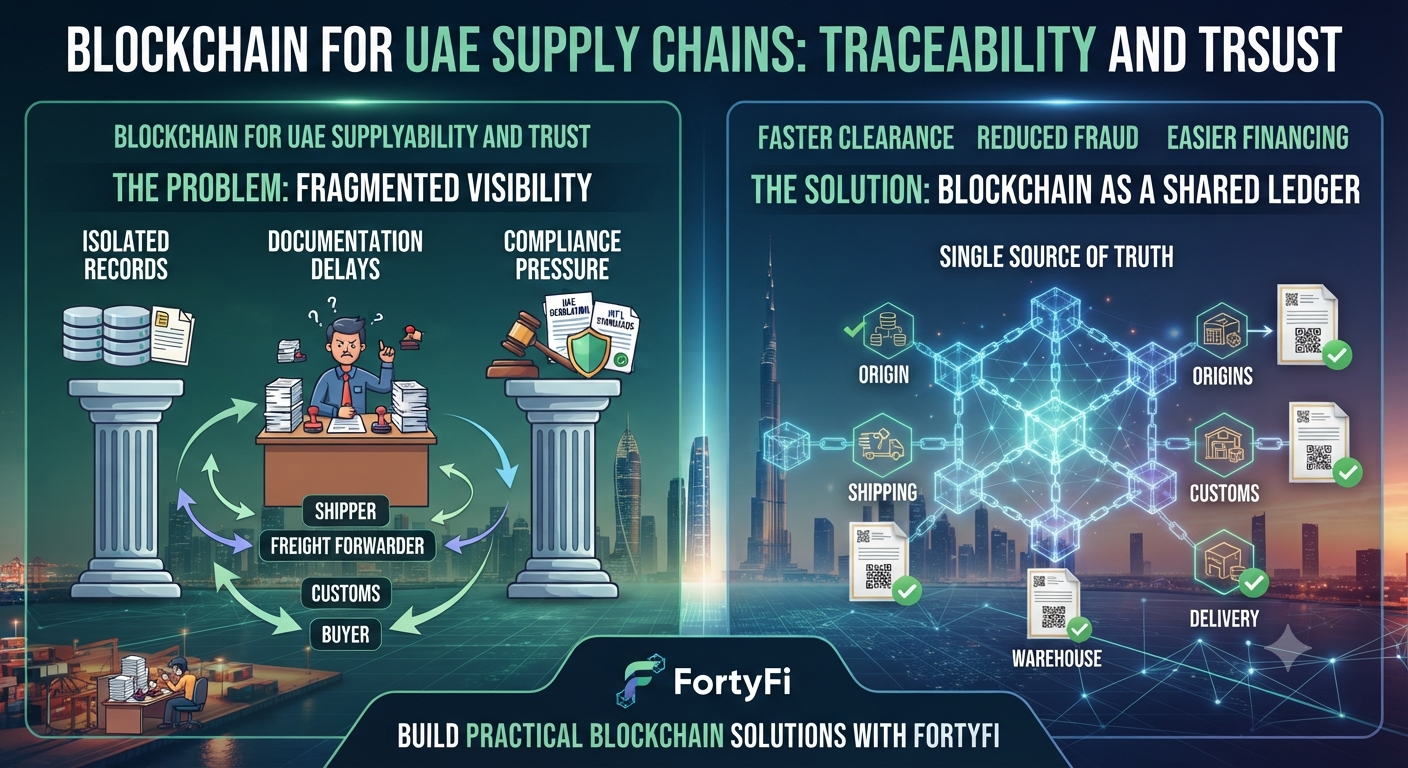
The Problem: Fragmented Visibility
Modern supply chains involve multiple parties across borders, each with their own
systems and records.
● No single source of truth: Shippers, freight forwarders, customs, and buyers all
maintain separate records, creating reconciliation nightmares.
● Manual documentation: Trade finance still relies heavily on paper bills of lading,
certificates of origin, and inspection reports—prone to fraud and delays.
● Compliance pressure: UAE regulators and international partners increasingly
demand proof of origin, ethical sourcing, and temperature integrity for sensitive
goods.
The Solution: Blockchain as a Shared Ledger
Blockchain provides a single, immutable record that all parties can trust. Smart
contracts automate documentation and payment triggers when conditions are met.
Each scan or checkpoint creates a permanent, auditable trail.
For UAE supply chains, this means faster customs clearance, reduced fraud, easier
financing, and stronger compliance with international trade rules.
Real Numbers: The Cost of Inefficiency
The UAE's supply chain sector loses billions annually to documentation delays, fraud,
and reconciliation errors. Trade finance gaps alone cost the global economy $1.5 trillion
annually. Blockchain solutions have shown potential to reduce documentation
processing time by up to 80%.
UAE-Specific Considerations
Dubai's Blockchain Strategy aims to position the emirate as a blockchain-powered
government. Abu Dhabi's ADGM has pioneered digital trade finance frameworks. UAE
ports are actively piloting blockchain for cargo tracking, and compliance with
international sanctions and origin rules is non-negotiable.
Why FortyFi
FortyFi builds practical blockchain solutions for UAE supply chains. We focus on
traceability, compliance, and integration with existing logistics systems—not theoretical
demos that never reach production.
FAQ
Can blockchain prevent counterfeit goods? Yes, by creating an immutable provenance
record from origin to delivery.
Is blockchain expensive to implement? Costs vary, but targeted traceability solutions are
often cheaper than fraud losses and manual reconciliation.
Do all supply chain parties need to use blockchain? No, permissions can be managed so
only relevant parties access specific data.
Audit Your Supply Chain
Message FortyFi on WhatsApp for a free blockchain traceability assessment.