Compliance & Legal
Cross-Border Data Transfer Rules in the UAE Explained
Jul 01, 2026
Introduction
Cross-border data transfer is a critical part of modern digital operations in the UAE. Businesses often use global cloud services, SaaS tools, and international vendors, which means data frequently moves outside UAE borders.
Under UAE PDPL, cross-border data transfers are regulated to ensure personal data remains protected.
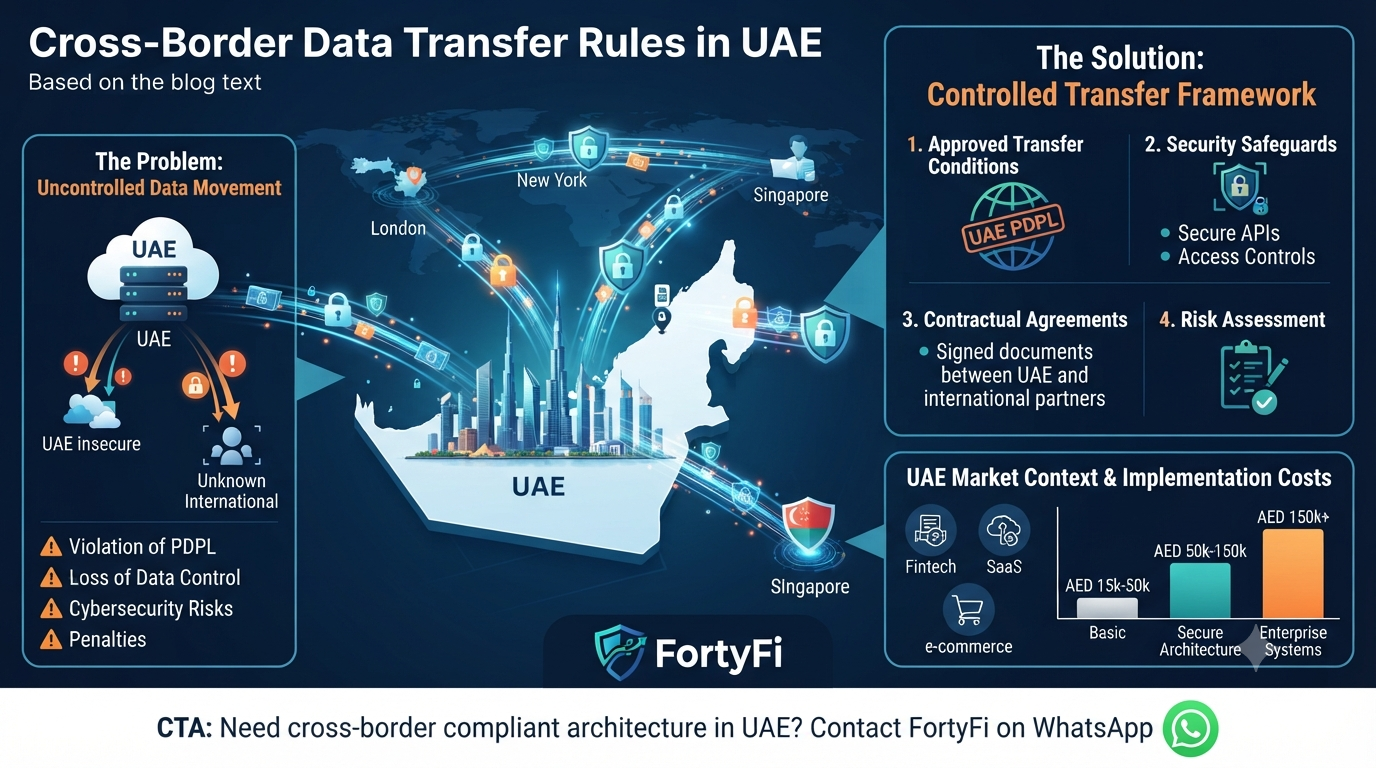
The Problem: Uncontrolled Data Movement
Many companies unknowingly transfer data outside the UAE without proper safeguards. This creates risks such as:
● Violation of PDPL requirements
● Loss of data control
● Increased cybersecurity exposure
● Legal and regulatory penalties
The Solution: Controlled Transfer Framework
To comply with UAE regulations, businesses must ensure:
1. Approved Transfer Conditions
Data can only be transferred if adequate protection exists in the receiving country.
2. Security Safeguards
● Encryption during transfer
● Secure APIs
● Access restrictions
3. Contractual Agreements
Clear data processing agreements with vendors and cloud providers.
4. Risk Assessment
Evaluate third-party platforms before sharing data.
A strong software development partner Dubai companies rely on ensures cross-border flows are compliant by design.
Real Numbers
Cross-border compliance implementation costs:
● AED 15,000–50,000: Basic compliance review
● AED 50,000–150,000: Secure architecture and vendor alignment
● AED 150,000+: Enterprise global data compliance systems
UAE Market Context
Industries like fintech, SaaS, and e-commerce heavily depend on global integrations, making compliance essential.
Why FortyFi
FortyFi builds secure data systems that manage cross-border flows while maintaining PDPL compliance.
FAQ
Q: Can UAE companies use foreign cloud providers?
Yes, but with compliance controls in place.
Q: Is data transfer always restricted?
No, but it must meet PDPL conditions.
CTA
Need cross-border compliant architecture in UAE? Contact FortyFi on WhatsApp.