Web3 & Blockchain
Decentralised Identity for UAE Citizens and Residents
Jul 01, 2026
Introduction
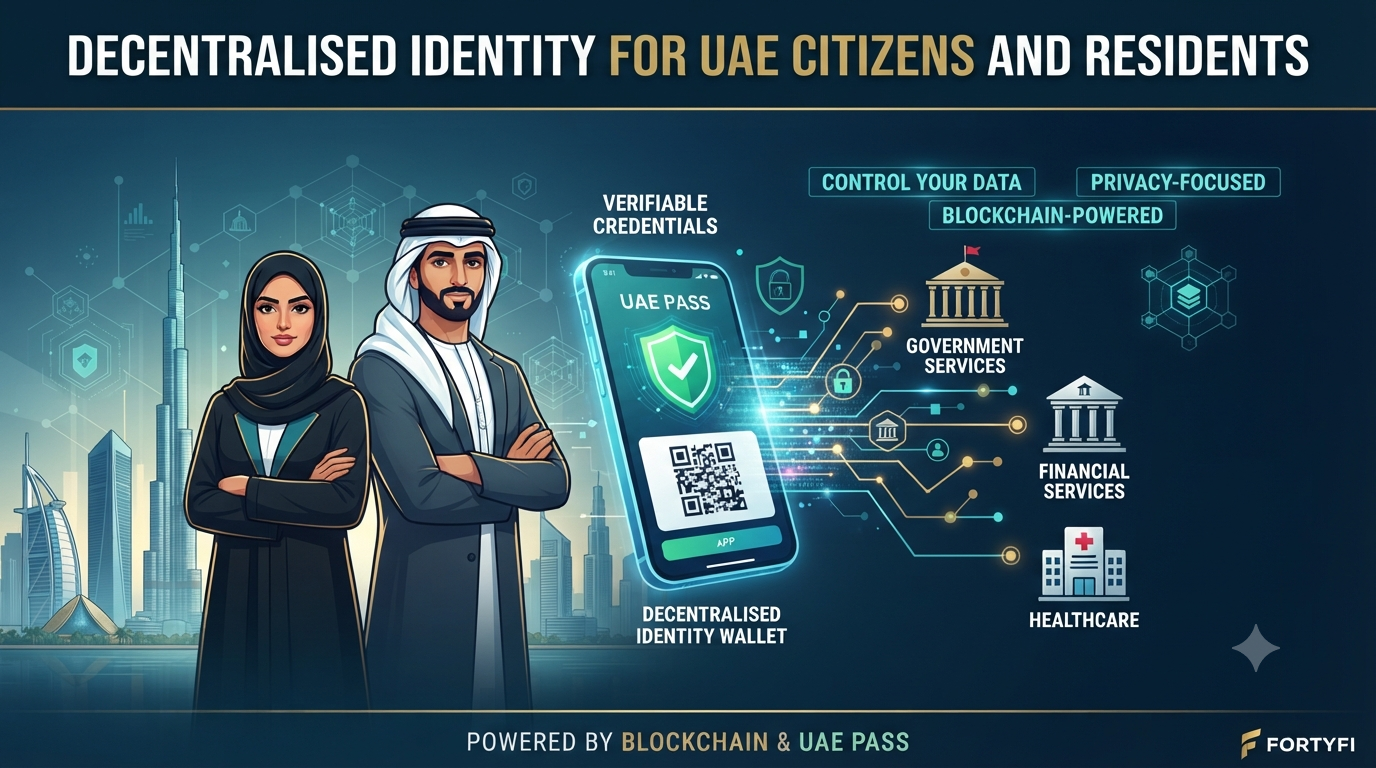
Decentralised identity (DID) puts individuals in control of their own digital identity. Instead of storing personal data with multiple service providers, users hold their credentials in a secure wallet and share only what's needed. The UAE is leading this shift with blockchain-powered identity infrastructure .
The Problem: Centralised Identity Is Broken
Traditional identity systems store personal data with third parties, creating single points of failure. A breach at a central provider exposes millions of users. Users don't own their data; they rely on organisations to manage it. Each service requires separate KYC, creating fragmented identities and repeated document uploads . This model is fragile and invasive.
The Solution: Self-Sovereign Identity on Blockchain
DID uses blockchain as a trust anchor. Users store credentials in a digital wallet, not on a central server. They share only what's necessary—for example, proving they're over 18 without revealing their birth date. Verifiable Credentials are cryptographically signed by trusted issuers and instantly verifiable . This is Self-Sovereign Identity (SSI).
Real Numbers: The Scale of Adoption
The global decentralised identity market was valued at USD 647.8 million in 2022 and is forecast to reach USD 102 billion by 2030, growing at 90.3% annually . The UAE PASS now provides access to over 12,000 government and private sector services for citizens and residents .
UAE-Specific Security Considerations
The UAE PASS is the country's first national digital identity, linked to the Emirates ID and powered by blockchain . In May 2024, Digital Dubai integrated blockchain-based digital ID modules into UAE PASS, enabling self-sovereign identity for accessing federal services . The UAE's PDPL requires personal data to be stored with proper controls—blockchain-based identity systems must align with data protection rules . Innovation City in Ras Al Khaimah has launched blockchain-based business IDs on OPN Chain, replacing static licenses with cryptographically verifiable assets .
Why FortyFi
FortyFi helps businesses build and integrate decentralised identity solutions compliant with UAE's PDPL and regulatory framework.
FAQ
What is decentralised identity? A model where individuals control their digital identity using blockchain-backed credentials, without relying on central authorities. How does UAE PASS work with blockchain? UAE PASS uses blockchain to securely store, request and share official documents, with robust security and traceability features. Does PDPL apply to DID systems? Yes. Any system handling personal data of UAE residents must comply with PDPL requirements for storage and consent.
Build Decentralised Identity Solutions
Message FortyFi on WhatsApp for a free consultation on DID integration.