Cybersecurity
How to Build a Security-First Culture in Your UAE Company
Jul 01, 2026
Introduction
Cybersecurity is not only a technology problem.
It is a people problem too.
Firewalls matter.
Endpoint protection matters.
Monitoring matters.
But even the best technology cannot fully protect a business if employees consistently make
risky decisions.
Clicking phishing links.
Using weak passwords.
Sharing credentials.
Ignoring suspicious activity.
One human mistake can create serious exposure.
Across Dubai and the UAE, businesses are investing heavily in security tools.
That is important.
But tools alone are not enough.
A strong security posture requires something deeper.
Culture.
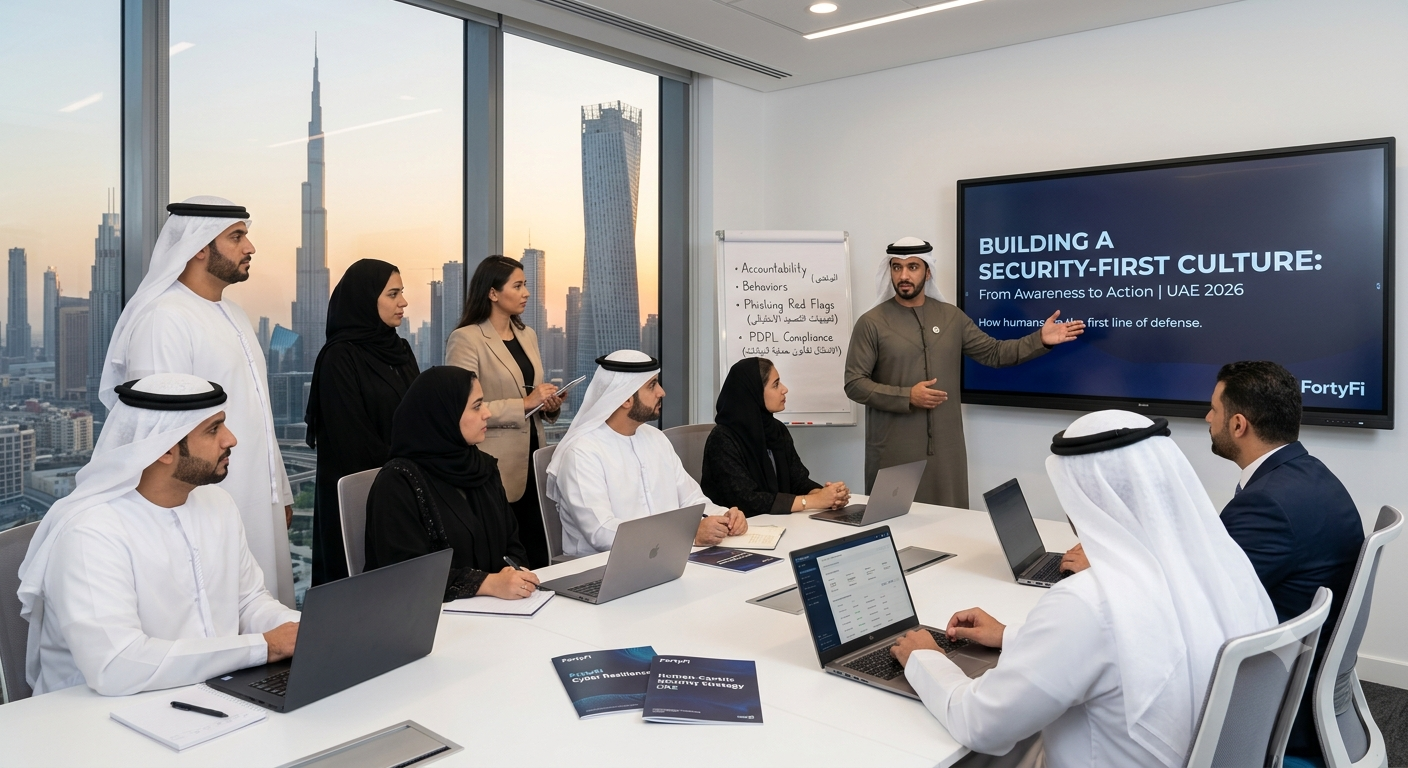
Security must become part of how people think, work, and make decisions every day.
That is what a security-first culture creates.
The question is no longer whether technology matters.
The real question is whether your people strengthen security or weaken it.
The Problem: Human Error Remains One of the Biggest Risks
Most cyber incidents involve human behavior in some way.
Not always malicious.
Often accidental.
That creates major business risk.
Common people-related security risks include:
● Phishing clicks
● Weak passwords
● Credential sharing
● Unsafe remote work practices
● Poor reporting of suspicious activity
The biggest challenge is mindset.
Many employees view security as someone else's responsibility.
IT's problem.
Security team's job.
Leadership's concern.
That mindset creates gaps.
Attackers exploit these gaps.
They target people because humans are often easier to manipulate than systems.
Weak security culture increases exposure.
Technology alone cannot solve this.
The Solution: Make Security Everyone's Responsibility
Strong security culture starts with leadership.
The first layer is commitment.
Leadership must visibly prioritize security.
The second layer is awareness.
Employees need practical training to recognize modern threats.
The third layer is behavior.
Secure habits must become part of daily workflows.
This is where cyber security Dubai strategies and SOC as a service UAE provide major
value. Strong security programs combine technology with awareness and behavior-focused risk
reduction.
The fourth layer is accountability.
Every employee should understand their role in protecting the business.
Key culture-building priorities include:
● Leadership commitment
● Security awareness
● Safe daily behavior
● Threat reporting
● Accountability
The strongest businesses build security into culture.
People become a defensive advantage.
Real Numbers: Security Culture Investment vs Breach Risk
Approach Typical Annual
Cost
Business Impact
Minimal awareness training AED 0–10,000 High human risk
Basic security culture program AED
15,000–50,00
0
Reduced exposure
Advanced security-first culture
strategy
AED
50,000–150,0
00+
Strong resilience and
awareness
The numbers are clear.
The cost of building strong security culture is significantly lower than the financial and
operational damage caused by preventable incidents.
Better awareness reduces risk.
Strong habits improve resilience.
UAE-Specific Security Considerations
For businesses operating in Dubai and across the UAE, human-related security risks directly
affect resilience and compliance.
Security incidents involving sensitive data can impact PDPL compliance UAE and broader
data protection UAE obligations.
Key culture priorities include:
● Employee awareness
● Secure behavior
● Threat detection
● Incident reporting
● Compliance readiness
Businesses handling sensitive systems should treat security culture as a strategic priority.
People influence security outcomes daily.
Why FortyFi
FortyFi helps businesses across Dubai and the UAE strengthen cyber resilience through
practical security culture strategies.
From awareness training and risk assessments to monitoring and incident response, the focus
is on reducing human-related cyber risk.
The team helps businesses improve awareness, strengthen behavior, and build stronger
security culture.
The objective is simple: turn employees into a powerful line of defense.
FAQ
What is a security-first culture?
It means employees consistently prioritize security in daily work.
Why does security culture matter?
Human behavior plays a major role in cyber risk.
Can training reduce cyber risk?
Yes. Practical awareness significantly improves security behavior.
Who owns security culture?
Everyone—from leadership to employees.
Does strong security culture help compliance?
Yes. It improves resilience and supports compliance readiness.
Is Human Risk Quietly Weakening Your Security?
Technology matters.
But people matter just as much.
Businesses that build strong security culture dramatically reduce cyber risk.
Message FortyFi today for a security culture assessment and strengthen your organization's
human defence layer.