Cloud & Infrastructure
Kubernetes for UAE Enterprises: When You Need It and When You Don't
Jul 01, 2026
Introduction
Kubernetes has become the default container orchestration platform, but it's not always the right choice. Many UAE enterprises adopt Kubernetes for the wrong reasons, adding unnecessary complexity. Knowing when you need it—and when you don't—saves time and money.
The Problem: Kubernetes Adds Complexity
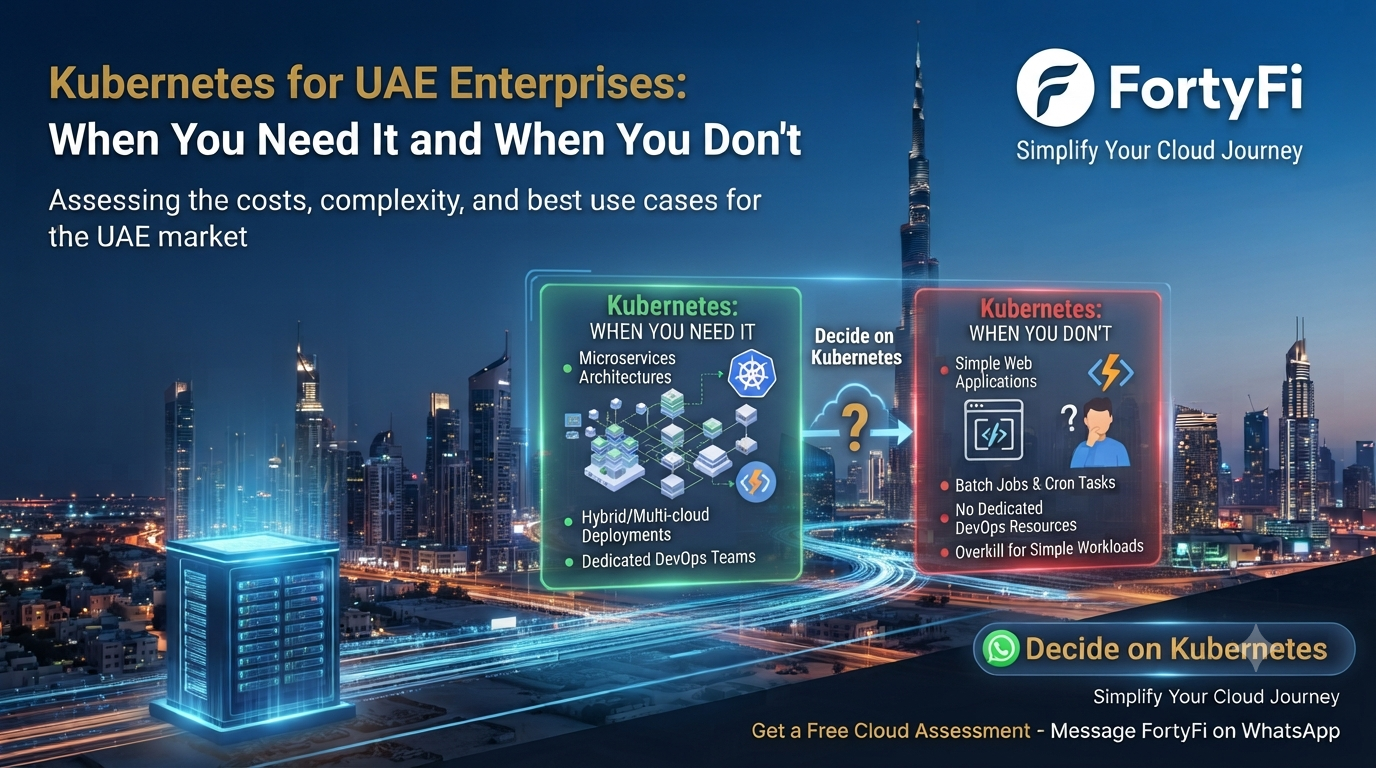
Kubernetes introduces significant operational overhead. Managing clusters, networking, security, and upgrades requires specialised skills. For simple workloads, Kubernetes is overkill—serverless or managed container services are simpler and cheaper.
The Solution: Use Kubernetes for the Right Reasons
Use Kubernetes for microservices architectures needing auto-scaling and resilience across hybrid or multi-cloud environments. Avoid Kubernetes for simple applications, batch jobs, or teams without dedicated DevOps resources. Consider alternatives like AWS Fargate, Azure Container Instances, or Google Cloud Run for simpler deployments.
Real Numbers: The Cost of Complexity
A survey found 80% of Kubernetes users have overspent on infrastructure. Kubernetes clusters often run 50% more capacity than needed. Managed Kubernetes adds 20–30% to cloud bills.
UAE-Specific Security Considerations
Dubai's DevOps talent gap makes Kubernetes adoption harder. Managed services like Azure Kubernetes Service simplify operations. Sovereign cloud providers offer managed Kubernetes with local compliance.
Why FortyFi
FortyFi helps UAE enterprises decide if Kubernetes is right—and implement it only when it delivers real value.
FAQ
Do I need Kubernetes for a simple web app? No. Serverless or managed containers are simpler and cheaper. What's the cost of managed Kubernetes? $73–500+ per month for the control plane, plus worker nodes and storage. Is Kubernetes compliant with UAE regulations? Yes, but the underlying infrastructure must meet PDPL and sovereignty requirements.
Decide on Kubernetes
Message FortyFi on WhatsApp for a free Kubernetes assessment.