Web3 & Blockchain
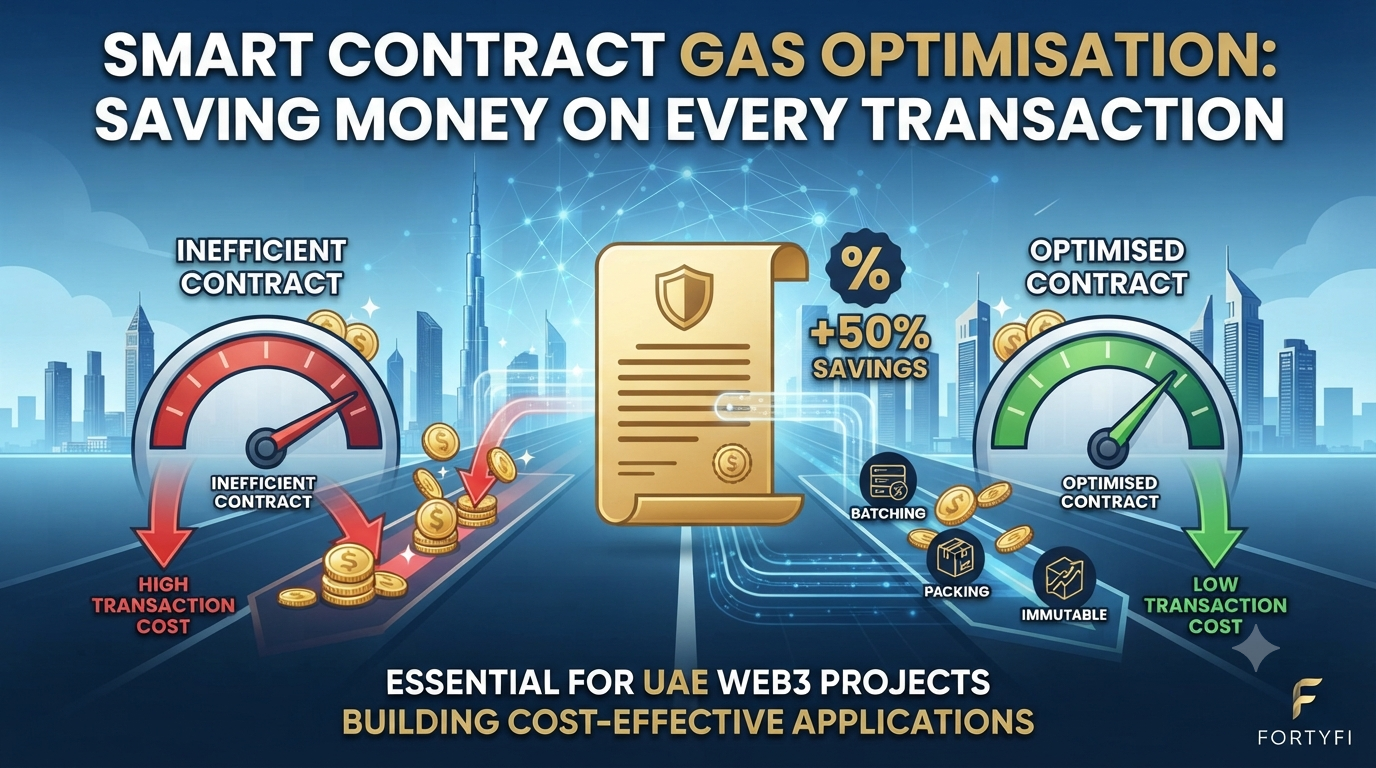
Smart Contract Gas Optimisation: Saving Money on Every Transaction
Jul 01, 2026
Introduction
Gas fees are a direct cost to your users. Inefficient smart contracts waste money on every transaction. For UAE Web3 projects, optimising gas isn't optional—it's essential for competitive user experience and sustainable economics.
The Problem: Inefficient Contracts Burn Money
Poorly optimised contracts cost users more in gas fees. Complex logic, unnecessary storage writes, and inefficient loops make transactions expensive. An extra 50,000 gas per transaction adds up quickly at scale.
The Solution: Optimise Storage and Logic
Use uint256 instead of smaller types—EVM optimises for 256-bit. Store data in bytes32 instead of strings where possible. Batch operations to reduce transaction count. Use immutable and constant for values that don't change. Pack multiple small variables into one storage slot.
Real Numbers: The Savings
A simple token transfer costs around 21,000 gas. Batch transfers can reduce cost per transfer by over 50%. A poorly optimised NFT mint can cost 150,000 gas; an optimised one can bring that down to under 100,000—saving users $1–$2 per transaction.
UAE-Specific Security Considerations
For UAE projects with high transaction volumes—like loyalty programs or payment apps—gas savings directly impact user retention. Lower fees make your app accessible to more users.
Why FortyFi
FortyFi builds gas-optimised smart contracts for UAE Web3 projects. We minimise transaction costs so your users stay.
FAQ
What costs the most gas? Storage writes. Reading is cheap; writing is expensive. How can I reduce gas costs? Batch transactions, pack storage variables, and avoid unnecessary loops. Is gas optimisation worth it for my project? Yes. Every transaction cost saved is passed to your users—improving retention.
Optimise Your Smart Contracts
Message FortyFi on WhatsApp for a free gas optimisation review.