Cybersecurity
Vulnerability Management for UAE SMBs Without a Security Team
Jun 30, 2026
Introduction
Many small and mid-sized businesses across Dubai and the UAE face the same challenge.
They understand cyber risk is growing.
They know vulnerabilities in systems, applications, and cloud environments can expose the business to ransomware, data breaches, and operational disruption.
But they lack one critical resource.
A dedicated security team.
For many SMBs, building an in-house cyber security department is expensive and difficult.
Hiring skilled security professionals remains costly, and retaining them can be even harder.
That creates a dangerous gap.
Threats continue to evolve while vulnerabilities accumulate quietly in the background.
Unpatched systems, outdated software, weak configurations, and exposed services create opportunities for attackers.
This is exactly why vulnerability management matters.
Even without a dedicated security team, businesses can still build a practical and highly effective vulnerability management process.
The goal is simple.
Identify weaknesses early and fix them before attackers exploit them.
The Problem: Vulnerabilities Grow Faster Than Most SMBs Can Track
Modern business environments change constantly.
New devices are added. Applications are updated. Cloud infrastructure expands. Vendors integrate with internal systems. Employees use more tools than ever before.
Every change introduces potential risk.
The challenge is visibility.
Many SMBs do not have a complete inventory of devices, systems, applications, or external-facing assets. Without visibility, vulnerabilities remain hidden.
That creates significant exposure.
Attackers continuously scan the internet for outdated software, misconfigured services, exposed applications, and known vulnerabilities.
They automate the process.
This means businesses do not need to be specifically targeted to become victims.
Any unpatched weakness can become an easy entry point.
Without structured vulnerability management, risk compounds over time.
The Solution: Build a Practical Vulnerability Management Process
Effective vulnerability management does not require a large security team.
It requires consistent processes, visibility, and prioritization.
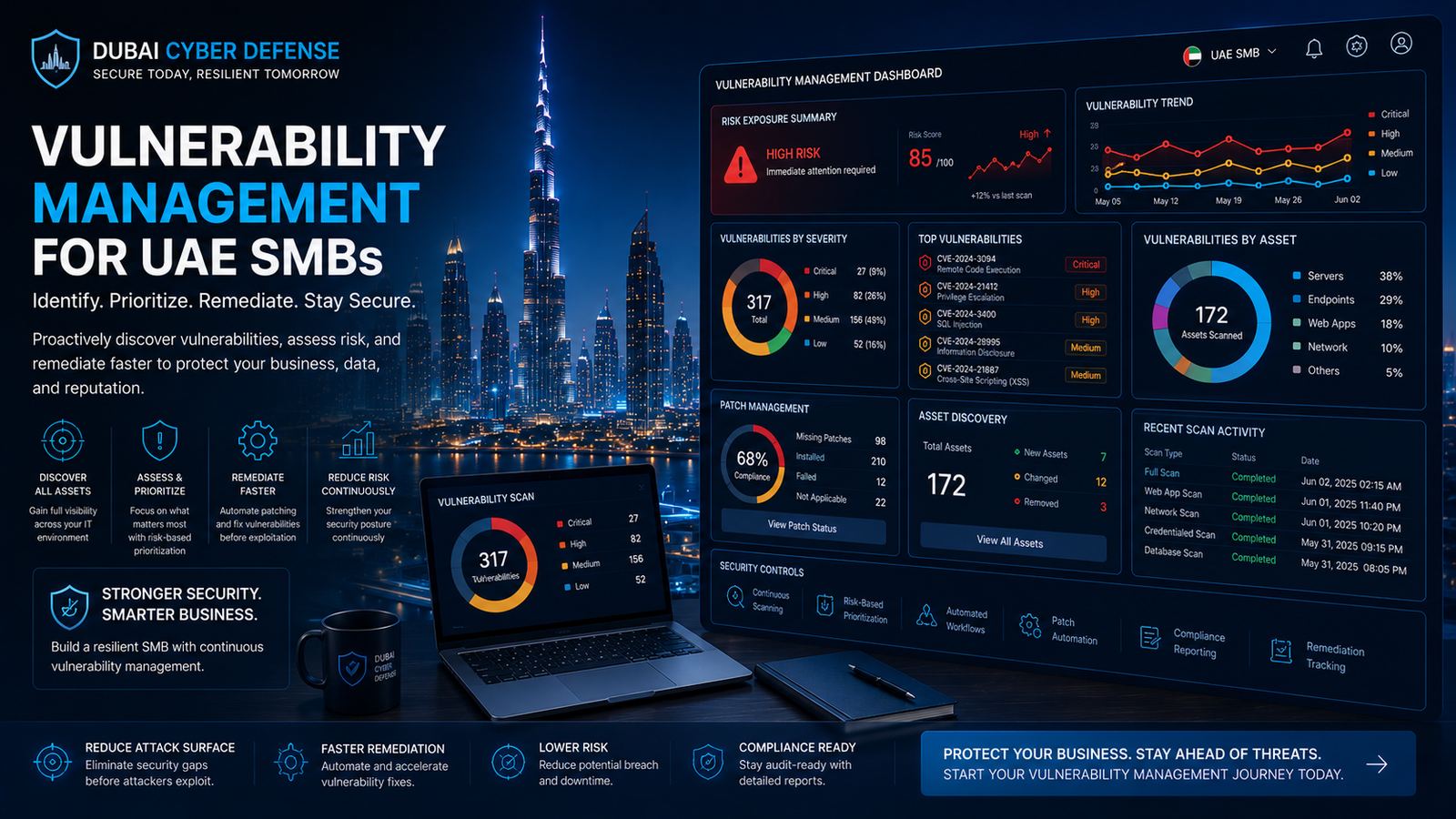
The first step is asset visibility.
Businesses must know what systems, endpoints, cloud resources, and applications they are responsible for protecting.
The second step is regular vulnerability scanning.
Automated scans help identify missing patches, outdated software, weak configurations, and exposed services.
The third step is prioritization.
Not every vulnerability creates the same level of risk. Businesses should focus first on vulnerabilities affecting critical systems, internet-facing services, and sensitive data.
This is where cyber security Dubai strategies such as managed monitoring and SOC as a service UAE provide strong value. External security expertise helps businesses improve visibility and accelerate remediation.
The strongest vulnerability management programs focus on continuous improvement.
Small consistent action reduces major risk.
Real Numbers: Prevention vs Breach Cost
Approach | Typical Annual Cost | Business Impact
No structured vulnerability management | AED 0 upfront | High exposure to hidden risks
Basic vulnerability management | AED 15,000–40,000 | Reduced exposure and better visibility
Advanced managed security program | AED 40,000–120,000 | Strong risk reduction and faster remediation
The cost difference is clear.
The investment required for structured vulnerability management is significantly lower than the cost of ransomware, breaches, or major downtime caused by exploitable vulnerabilities.
Early detection saves money.
Prevention creates resilience.
UAE-Specific Security Considerations
For businesses operating in Dubai and across the UAE, vulnerability management supports both security and compliance objectives.
Unpatched systems or exposed services can directly impact PDPL compliance UAE and broader data protection UAE requirements if sensitive customer data becomes exposed.
Key vulnerability management priorities include:
● Asset visibility
● Vulnerability scanning
● Patch management
● Configuration security
● Continuous monitoring
Businesses handling sensitive data should treat vulnerability management as essential.
Unmanaged risk grows quickly.
Why FortyFi
FortyFi helps businesses across Dubai and the UAE strengthen cyber resilience through practical vulnerability management and managed security services.
From asset discovery and vulnerability scanning to threat monitoring and remediation support, the focus is on helping businesses reduce cyber risk without requiring large internal security teams.
The team helps businesses improve visibility, prioritize risk, and strengthen security over time.
The objective is simple: identify and fix weaknesses before attackers exploit them.
FAQ
What is vulnerability management?
Vulnerability management is the process of identifying, prioritizing, and fixing security weaknesses.
Do SMBs need vulnerability management?
Yes. Vulnerabilities affect businesses of all sizes.
Is vulnerability scanning enough?
Scanning is important, but remediation and ongoing monitoring are equally critical.
Can SMBs manage vulnerabilities without a security team?
Yes. Practical processes and managed security support make it achievable.
Does vulnerability management help compliance?
Yes. It strengthens security posture and supports compliance readiness.
Are Hidden Vulnerabilities Increasing Risk Inside Your Business?
Vulnerabilities do not fix themselves.
They accumulate quietly until attackers exploit them.
Businesses that build structured vulnerability management reduce risk dramatically.
Message FortyFi today for a vulnerability assessment and discover hidden risks before attackers do.